
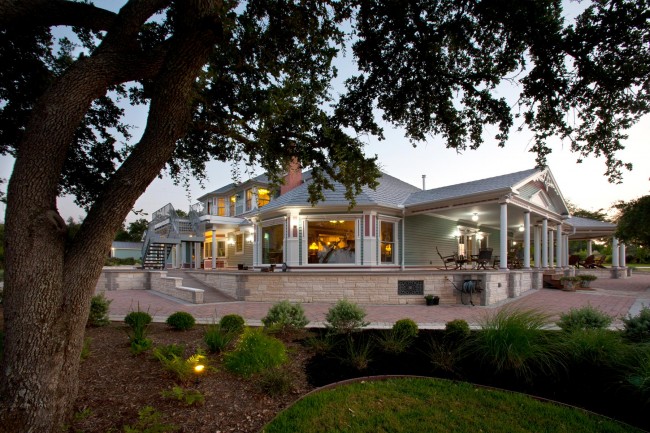
I’ve heard that question quite a few times. Honestly, I started to make this house colonial, with more of a Federalist look. Then, one day in the very early stages of building, I was wandering around in the bookstore and I found a book called The Queen Anne House: America’s Victorian Vernacular by Janet Foster & Radek Kurzaj. That was the end of it for me, I was in love! So that night at the dinner table, I asked my husband, “wouldn’t you like a house like this one?” referring to the picture on the front of my wonderful Queen Anne book. I don’t think he was even looking, but he responded from behind his computer with “Sure, honey, why don’t you build one of those.” So I did. And that is the beginning of the story.
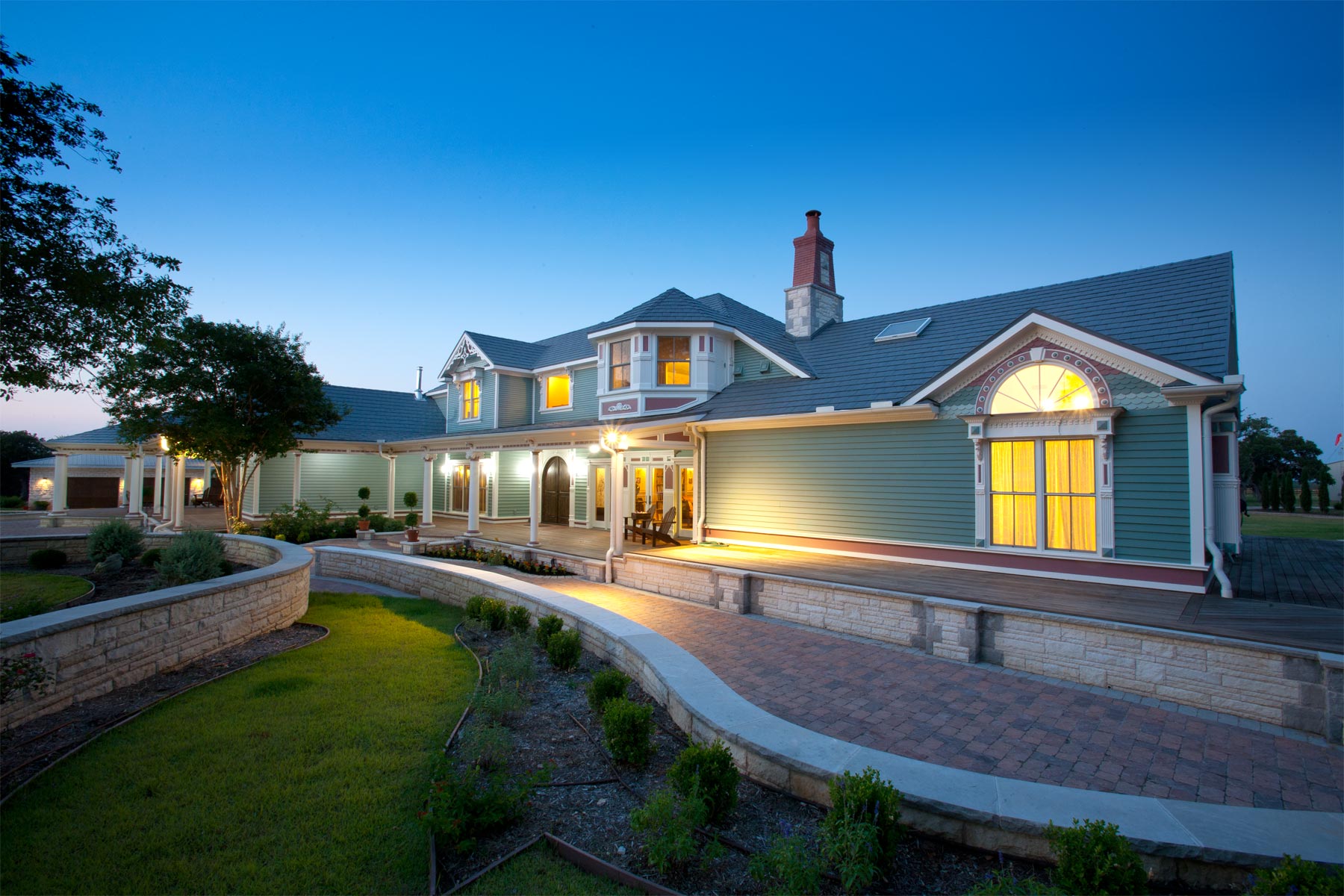 So why build a Queen Anne home? Because what other style of home conjures up more powerful memories of a bold, young nation striving for independence? The United States had just come out of the American Revolution, and had written the Declaration of Independence and the Constitution of the newly formed United States. The American people had come out of Europe and they wanted something new and different. The Queen Anne house fit the bill. It flew in the face of all that was contemporary, often described as “contradictory, undisciplined, exuberant and expressive”, yet “one of the most popular styles of architecture, particularly for domestic building ever built” and said to be “perhaps the best example of a national vernacular architectural style produced.” My husband and I love late nineteenth century, we love American and European history and we travel often to Europe. This house is the culmination of all our travel, reading, and living. My husband is an English South African and I’m a patriotic Midwesterner. Each time we enter the gates, it’s like going back in time. When we walk in the house, it’s the same. You feel as if you should be wearing a hoop skirt. That’s what I wanted to create here.
 Norman Shaw, an English architect credited with the development of the Queen Anne style in England, described the reign of Queen Anne (1702-1714) as the “last time England was agricultural, prosperous and peaceful”. After 911, I think a lot of people have begun to feel about America the way Shaw did about England in the late 1800’s. This house is a bit of nostalgia for us…a reminder of what America was in the good old days–apple pie, baseball, Mark Twain, John Phillips Sousa, Scott, Joplin, the Queen Anne house.

Features of this Queen Anne Home
Some of the highlights that make this house an architecturally-authentic, energy-efficient Queen Anne Home and a true representation of local Texas talent are presented below. Though the tile, paint and wallpaper came from England, the workmanship and many other aspects of the house are the result of local craftsmen.
Click the items below to reveal more information:
Three Quarter Inch #2 Grade Cypress Lap Siding
Three quarter inch #2 grade, cypress lap siding. This is what was used in the late 19th century to give those wonderful, old houses the deep shadow lines that we all love so much. Cypress was purposely chosen in the day for its longevity and accessibility. It is bug-resistant because it produces Cypressine, an oil that acts as a natural preservative within the wood. This inherent characteristic of cypress makes it durable and extremely resistant to harsh weather conditions, insects and fungus. Also because it lacks sap and doesn’t bleed, it takes well to sealers and paint. It’s dimensionally stable, easy to work with and resists splitting, warping and cracking. Cypress wood has also been reused after tearing down 100 year old structures. Definitely recyclable.
Scallops or fish scale trim is fancy cut, Western red cedar and has much the same quality as cypress. It was purchased from Bear Creek Lumber in Washington state and shipped to Texas because I couldn’t get enough locally in time to meet deadlines. Approximately 450 square feet or about 28 boxes of cedar were shipped for this project.
Gingerbread, gable ornaments and corbels were all custom made in Blanco, Texas and are made primarily of mahogany and cedar to withstand the elements.
Tamco Metal Roof Shingles
Gutter System for Rain Water Catchment
5,000 Square Foot Wrap Around Deck
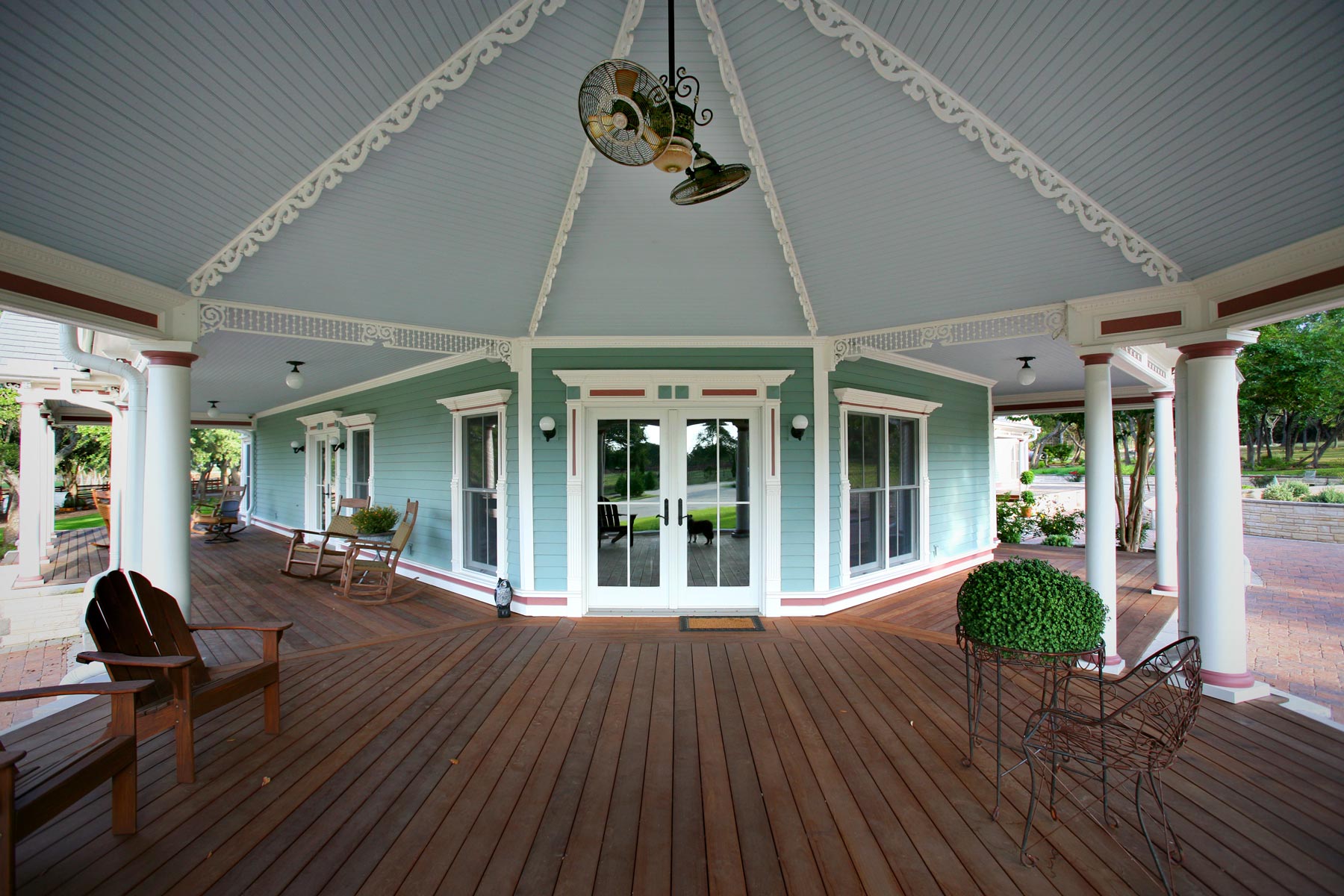 A deck surrounding the house is very much in keeping with the Victorian Queen Anne look and critical for keeping heat out of your house both then and now. Most good architects will tell you that the most important step in keeping a house cool is to not let it get hot in the first place. Porches, decks, house placement and so on go a long way toward that first step. The Ipe (Brazilian Walnut or Ironwood as it’s also known) is considered a very popular premium deck material. It is water resistant, insect resistant, and fire resistant. The deck is approximately 5,000 square feet and surrounds the entire house. We maintain it stained though it can be allowed to weather to a natural pewter color which would also look great with the house. It was built and put in by Austin Ipe using the Ipe Clip, a hidden deck fastener system which provides unparalleled holding strength, no unsightly screw holes or stain marks, increased structural integrity, and no dangerous screw pops and maximum holding power.
Custom Insulated Anderson Windows
Energy-Efficient Lighting with Authentic Period Fixtures
Chimneys
Limestone and Luder Stone Walls
Geometric Encaustic Handmade Tilework
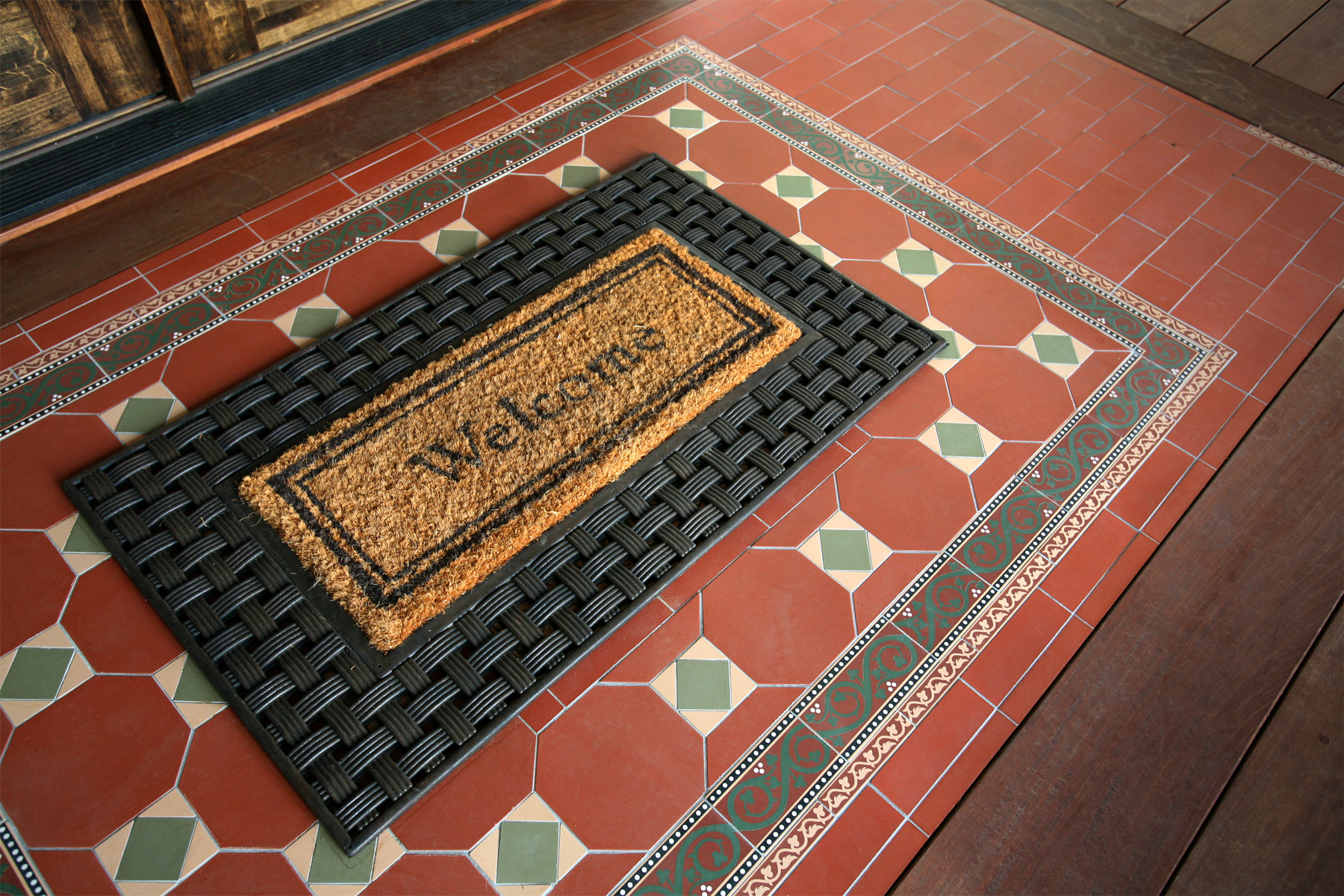 The Queen-Anne style home was always filled with a variety of intricate designs. These designs often extended to flooring and are found in the main and North entries, kitchen, Scullery, and bathrooms of this house. The actual geometric patterns are recreated from authentic Victorian cataloges from the Edwardian and Art Deco eras. Geometric tiles were originally used as ornamentation in Medieval churches, monasteries and homes of the aristocracy. The floor tiles in this house are both geometric and encaustic (meaning the design is not the result of a glaze but baked into the tile and thus will not wear away). The tile is imported from England.
The wall tiles in the kitchen and bathrooms are handmade, designer tiles produced by The Winchester Tile Company in the historic city of Exeter in the county of Devon using controlled manufacturing techniques honed over many years.
150 Year-Old Recovered Old Heart Pine Floors
Faux-Painted Ceilings
Authentic Wood/Coal Burning Stoves, Circa 1880-1910
Imported Kitchen Appliances
The kitchen also includes a Wolf In-Counter Steamer with separate faucet/drain to add water or clean. The Wolf steamer has temperature settings from 140 to boil and can keep food warm without drying out or losing flavor. It has a two-gallon capacity and holds up to 14 cups of cooked rice or pasta. It’s a great way to cook meat and fish.
We also have a Sub-Zero 48-inch built-in, side-by-side refrigerator/freezer with ice maker. A few of the features are an energy-efficient, dual refrigeration system, electronic microprocessor that constantly monitors the entire unit to ensure proper food storage environment, an air purification system to reduce odors, filter bacteria, viruses and ethylene gas. What’s more, the unit is easy to clean and has adjustable glass shelves.
Miele Dishwasher
Faux work and painting
Paint and Wall Pape
http://us.farrow-ball.com/our-paint/content/fcp-content
16' x 12' Custom Wrought Iron Automated Entry Gate
 Information coming soon.
Rear Entry Custom Wrought Iron Stairs
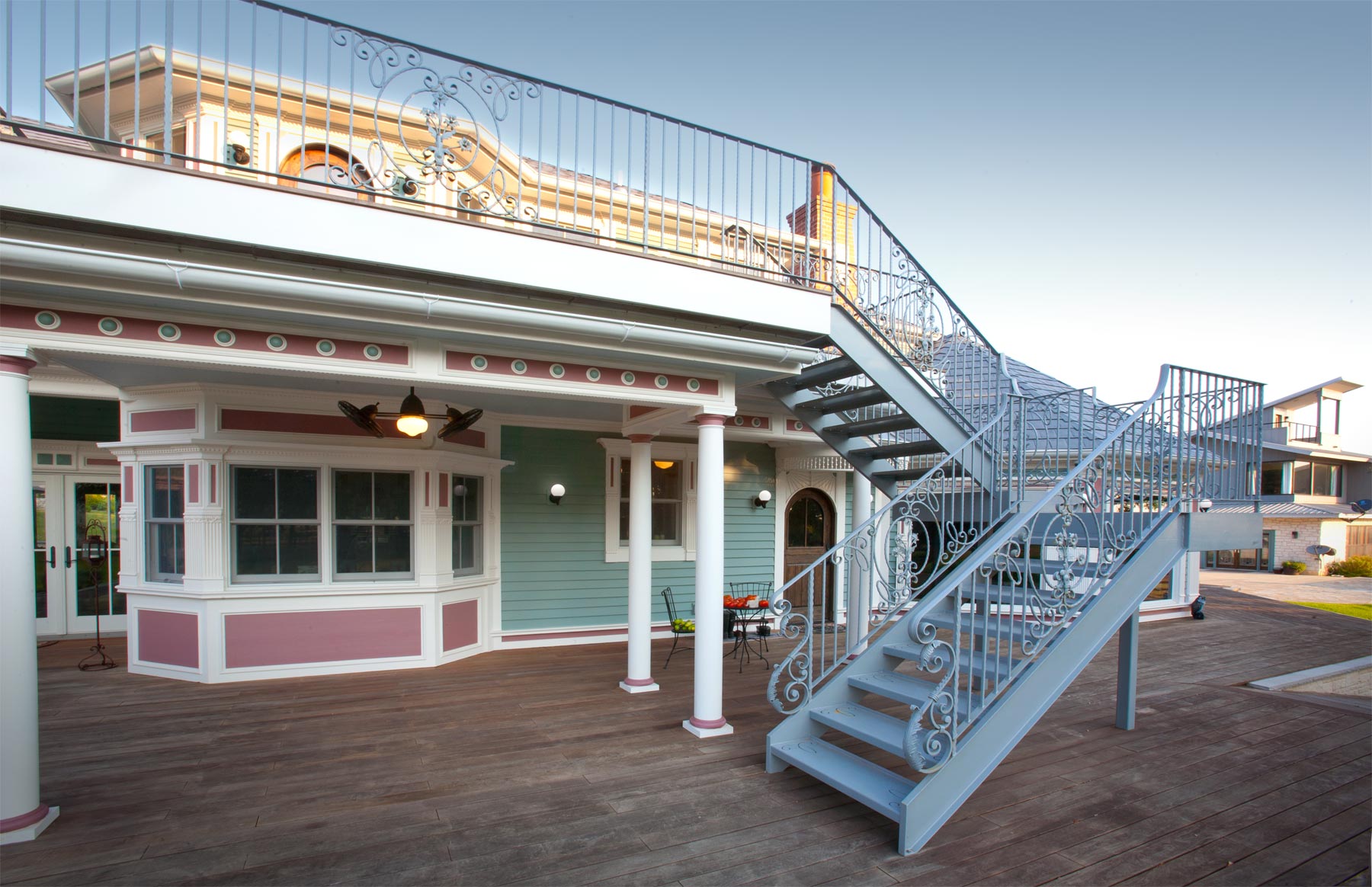 Custom made and painted with Direct-to-Metal paint by Sherwin Williams.
Crestron Audio/Video, Smart House Technology and Security System
Spray Foam Insulation
Geothermal Home Climate Control
35,000 Gallon Water Catchment System
Generac Guardian Series Standby whole house Generator, 60 kW
This entry was posted on Saturday, June 30th, 2012 at 8:00 pm
You can follow any responses to this entry through the RSS 2.0 feed.
Posted in: Country Living, Manor